There is a concept at the heart of one of the world’s oldest philosophical traditions that resists every attempt to pin it down. The Tao (pronounced roughly dao) is the foundational idea of Taoism, and it has been described as the source of all things, the natural order of the universe, and the way reality moves when nothing is forcing it. It is also, famously, something that cannot quite be put into words.
That might sound like a convenient dodge. But the paradox is actually the point, and it makes a particular kind of sense. This article is an attempt to explain what the Tao is, where the idea comes from, and why it still matters as a practical guide for living.
What Is the Tao? The Basic Meaning
The word Tao (also written Dao) is a Chinese character that translates most literally as “way” or “path.” In everyday Mandarin it can mean something as simple as a road or a method. But in the philosophical and spiritual tradition that bears its name, the Tao means something far larger: the underlying principle or force that gives rise to everything in existence and keeps it moving in harmony.
Think of it less as a thing and more as a process. The Tao is the way water flows downhill without being told to. It is the way seasons turn, the way a seed becomes a tree without planning to, the way a perfectly thrown pot seems to shape itself under the hands of a skilled potter. It is the natural grain of reality, and the central claim of Taoism is that human beings fare best when they learn to move with it rather than against it.
Where the Idea Comes From: Lao Tzu and the Tao Te Ching
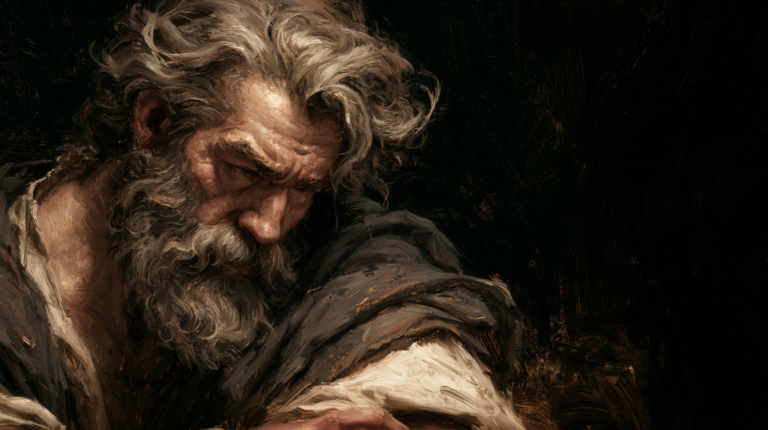
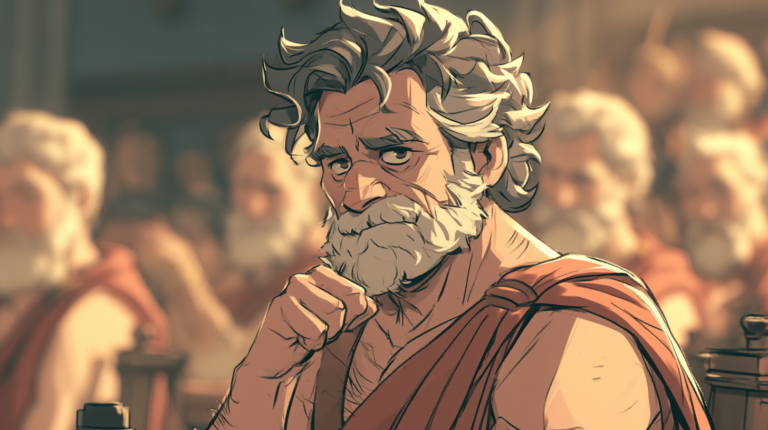
The primary source for the concept is the Tao Te Ching, a short but extraordinarily dense text attributed to the sage Lao Tzu. The text is traditionally dated to around the 6th century BCE, though scholars debate both the dating and whether Lao Tzu was a single historical figure or a composite. What is not in dispute is the text’s influence: it is one of the most translated books in the world.
The Tao Te Ching opens with what may be its most important line:
“The Tao that can be told is not the eternal Tao.”
This is Lao Tzu’s way of warning the reader from the very first sentence that language will always fall short of the thing itself. The Tao is not a god in the personal sense, not a law you can write down, and not a force you can measure. It is prior to all of those categories. It is what was there before distinctions existed.
For practical guidance on how Lao Tzu expressed this idea in his own words, our collection of Lao Tzu’s greatest quotes is a good companion to this essay.
The Tao and the Nature of Things: Key Ideas
The Tao as Source
In Taoist thought, the Tao is not just the way things behave, it is the origin of things. Chapter 42 of the Tao Te Ching describes a kind of cosmological unfolding: “The Tao gives birth to one, one gives birth to two, two gives birth to three, three gives birth to ten thousand things.” The “ten thousand things” is a classical Chinese idiom for everything that exists. The Tao is the ground from which all of it emerges.
This is not exactly a creation myth in the Western sense. The Tao does not create the world the way a craftsman builds a table. It is more that the world is a natural expression of the Tao, the way ripples are an expression of a stone dropped in water.
Te: The Virtue or Power of the Tao
The full title Tao Te Ching is often translated as “The Book of the Way and Its Virtue.” The second word, Te, refers to the particular expression of the Tao in a given being or thing. Your Te is something like your authentic nature, the specific way the Tao flows through you. To act in accordance with your Te is to be fully and genuinely what you are, without forcing or pretending.
This is why Taoism does not ask you to become something other than yourself. It asks you to stop being less than yourself.
Wu Wei: Effortless Action
Perhaps the most practically useful concept connected to the Tao is wu wei, usually translated as “non-action” or “effortless action.” This does not mean passivity or laziness. It means acting in such a way that you are aligned with the natural flow of things rather than fighting it.
A skilled calligrapher does not force the brush. A good leader, in Taoist thought, governs so lightly that people feel they have governed themselves. Wu wei is the art of doing what is needed without excess effort, resistance, or ego. It is action that looks, from the outside, almost like no action at all.
If you find yourself caught in cycles of anxious over-planning, the Taoist critique of mental forcing is worth exploring alongside Stoic approaches in our piece on how to stop overthinking.
How the Tao Differs from Western Concepts of God or Nature
It is tempting, especially for Western readers, to map the Tao onto familiar categories. Is it God? Is it Nature? Is it something like the logos of the Stoics?
There are genuine similarities. The Stoic concept of the logos, the rational principle running through all things, shares something with the Tao. Both suggest that reality has an underlying coherence, and that wisdom means learning to live in harmony with it. But the Tao is notably less rational in flavour. It precedes logic. It is not a mind thinking, it is more like a current flowing.
It is also not a personal God. The Tao does not love, judge, reward, or punish. It simply is, and it moves, and everything moves with it whether it intends to or not. The question Taoism puts to you is not whether you believe in the Tao, but whether you are living in accord with it or working against it at every turn.
Why the Tao Still Matters: The Practical Angle
It would be easy to treat the Tao as an interesting piece of ancient cosmology and leave it there. But its real value is in what it implies for everyday life.
If there is a natural grain to things, then much of our suffering comes from cutting across that grain. We exhaust ourselves trying to control outcomes that are not ours to control. We force relationships, careers, and identities into shapes they do not naturally take. We overthink, over-manage, and over-engineer, and then wonder why we feel so tired.
The Taoist answer is not to try harder in the opposite direction. It is to become quieter, more attentive, and more willing to let things reveal their own shape. This is not resignation. It is a different kind of intelligence: one that works by listening rather than by imposing.
This orientation has surprising points of contact with other traditions. Both Buddhist teachings on non-attachment and Stoic teachings on the dichotomy of control share a similar suspicion of our habit of gripping too tightly. If you are curious about how karma and natural law function in Buddhist thought, our guide to what karma is in Buddhism covers closely related ground.
A Concept Worth Living With
The Tao is not something you understand once and file away. It is more like a lens you keep returning to, and each time you do, something different comes into focus. Lao Tzu understood this, which is why the Tao Te Ching is written in paradoxes rather than propositions. The book is not trying to tell you what the Tao is. It is trying to point at something that language circles without ever landing on.
What you can take away practically is this: there is a way things tend to go when they are not being forced. In your own life, in your relationships, in the work you do, there are natural rhythms and natural limits. The Tao suggests that attending to those, rather than overriding them, is where a certain kind of ease and clarity become possible.
That is not a small thing. And it is worth sitting with for longer than a single afternoon.