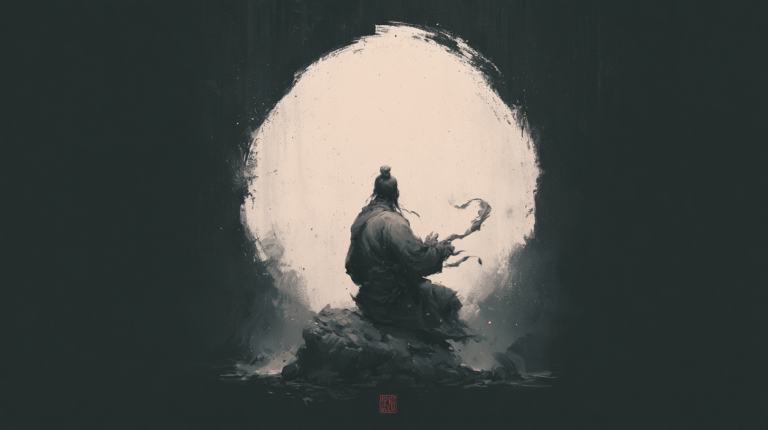
Confucius (551 to 479 BC) is one of the most influential thinkers in human history. His philosophy shaped the moral, social, and political fabric of China for over two thousand years, and his ideas on virtue, education, self-cultivation, and personal responsibility have spread far beyond East Asia into the global conversation about how to live a good life.
What makes Confucius remarkable is how practical his philosophy is. He was not interested in abstract metaphysics or speculation about the nature of the universe. He was interested in how people should treat each other, how to govern justly, how to cultivate character, and how to become the kind of person who makes the world around them better simply by being in it.
In this way, his thinking shares a surprising amount of common ground with the Stoics of ancient Greece and Rome. Where Marcus Aurelius wrote about ruling your own mind before trying to rule anything else, Confucius taught that the superior person looks inward first. Where Epictetus taught that we are shaped by how we respond to events rather than by the events themselves, Confucius taught that we are shaped by our habits, our reflections, and the company we keep.
At the heart of Confucian thought is the idea of ren, often translated as benevolence or humaneness. It is the quality of genuinely caring about others, of treating people with respect and compassion not because of what you might gain from it, but because it is the right way to live. Alongside ren sits li, which refers to proper conduct, ritual, and the habits that structure a virtuous life. Together, these two ideas form the foundation of everything Confucius taught: cultivate your inner character, and let that character express itself through how you act in the world.
Confucius’ teachings were compiled by his students into the Analects (Lunyu), which remains one of the most widely read philosophical texts in history. Below are some of his greatest quotes.
Confucius’ Greatest Quotes:
- “By three methods we may learn wisdom: First, by reflection, which is noblest; Second, by imitation, which is easiest; and third by experience, which is the bitterest.”
- “What the superior man seeks is in himself; what the small man seeks is in others.”
- “Attack the evil that is within yourself, rather than attacking the evil that is in others.”
- “If you look into your own heart, and you find nothing wrong there, what is there to worry about? What is there to fear?”
- “He who knows all the answers has not been asked all the questions.”
- “The man who asks a question is a fool for a minute, the man who does not ask is a fool for life.”
- “It does not matter how slowly you go as long as you do not stop.”
- “The gem cannot be polished without friction, nor man perfected without trials.”
- “When you see a good person, think of becoming like her or him. When you see someone not so good, reflect on your own weak points.”
- “If I am walking with two other men, each of them will serve as my teacher. I will pick out the good points of the one and imitate them, and the bad points of the other and correct them in myself.”
- “The superior man, when resting in safety, does not forget that danger may come. When in a state of security he does not forget the possibility of ruin. When all is orderly, he does not forget that disorder may come. Thus his person is not endangered, and his States and all their clans are preserved.”
- “It is not the failure of others to appreciate your abilities that should trouble you, but rather your failure to appreciate theirs.”
- “Everything has beauty, but not everyone sees it.”
- “It is easy to hate and it is difficult to love. This is how the whole scheme of things works. All good things are difficult to achieve, and bad things are very easy to get.”
- “Without feelings of respect, what is there to distinguish men from beasts?”
- “Give a bowl of rice to a man and you will feed him for a day. Teach him how to grow his own rice and you will save his life.”
- “The will to win, the desire to succeed, the urge to reach your full potential. These are the keys that will unlock the door to personal excellence.”
- “Ignorance is the night of the mind, but a night without moon and star.”
- “Choose a job you love, and you will never have to work a day in your life.”
The Superior Person
One of the central ideas in Confucian philosophy is the concept of the junzi, often translated as the “superior person” or “exemplary person.” This is not a title you are born with. It is a standard you work toward through self-cultivation, reflection, and discipline. The junzi looks inward before looking outward. They correct their own faults before criticizing the faults of others. They remain vigilant even in times of comfort, knowing that ease can breed complacency.
This idea resonates strongly with the Stoic emphasis on personal responsibility. Seneca taught that we should examine ourselves at the end of each day. Epictetus insisted that the only person you can truly improve is yourself. Confucius arrived at the same conclusion five centuries earlier and on the other side of the world: the path to a better society begins with the individual decision to become a better person.
Learning as a Way of Life
Confucius placed enormous value on learning, but not in the way we tend to think of education today. For Confucius, learning was not about accumulating credentials or memorizing facts. It was about developing wisdom through a combination of reflection, observation, and experience. His quote about three methods of learning captures this perfectly: reflection is the noblest path, imitation the easiest, and experience the most painful, but all three are necessary.
His insistence that everyone you meet can serve as a teacher is one of the most quietly radical ideas in all of philosophy. It strips away hierarchy and replaces it with humility. Whether someone is admirable or deeply flawed, there is something to learn from them. This is the same spirit of open inquiry that Socrates practiced in the streets of Athens, and it is an attitude that remains as valuable now as it was two and a half thousand years ago.
Confucius lived in a time of political instability and moral decline in China, and his philosophy was, at its core, an attempt to answer a simple question: how should we live? His answer was not grand or mystical. It was grounded in everyday conduct: be honest, be respectful, look inward before looking outward, never stop learning, and treat others the way you would wish to be treated. That final principle, known as the Golden Rule, appears in nearly every philosophical and religious tradition on earth, but Confucius was among the first to articulate it clearly.
His quotes endure because they are not abstract. They are instructions for daily life, and they work just as well in a modern office or household as they did in ancient China.
If you enjoyed these quotes, you might also find value in our collections on Lao Tzu, discipline, and the Stoic philosophers.