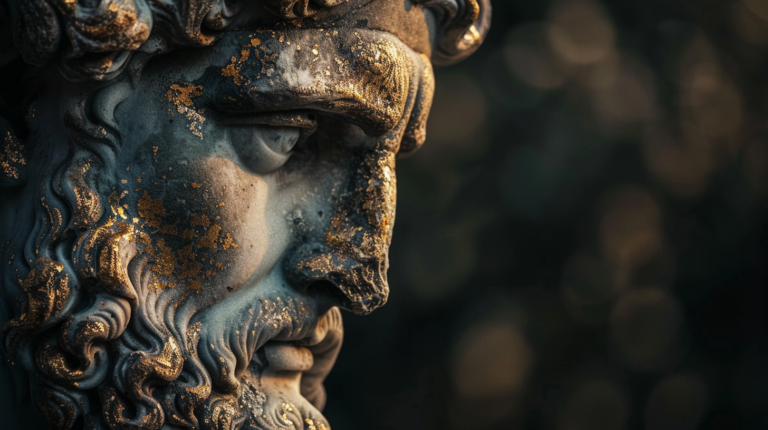
Few questions feel more urgent or more embarrassing to ask out loud. “What is the meaning of life?” can sound like a cliche from a student dormitory, and yet it is the oldest serious question philosophy has. Every major tradition, from ancient Athens to the forests of ancient India, has taken a position. The remarkable thing is how much those positions differ and how genuinely useful the disagreements still are.
This article works through the question as philosophy actually poses it, separates some important distinctions, and introduces the main families of answers. The goal is not to hand you a conclusion but to give you sharper tools for working the question out yourself.
Why the Question Is Harder Than It Looks
Before diving into answers, it helps to notice that “what is the meaning of life?” is actually several questions bundled together.
- The cosmic question: Does the universe as a whole have a purpose, and are human beings part of it?
- The biographical question: What makes a particular human life go well or feel worthwhile?
- The motivational question: What is worth caring about, and why bother doing anything at all?
Different philosophical traditions answer different versions of the question. Aristotle is largely concerned with the biographical one. Existentialists like Sartre are obsessed with the cosmic question precisely because they think the answer is “nothing” and want to know what follows from that. Stoics tend to address all three at once. Keeping these layers distinct helps you decide which answers are actually relevant to what you are wrestling with.
There is also a useful distinction between the meaning of life and meaning in life. The first asks whether existence itself has a point. The second asks whether individual lives can contain genuine significance regardless of any cosmic answer. Many contemporary philosophers argue that even if there is no grand external purpose written into the fabric of things, lives can still be deeply meaningful. That shift in framing is itself one of philosophy’s most liberating contributions.
Aristotle and the Idea of Flourishing
Aristotle’s answer to “What is the meaning of life?” was focused on a particular word in philosophy: eudaimonia. The word is usually translated as “happiness,” but that translation flattens it. A better rendering is flourishing, or living and doing well in a full human sense.
For Aristotle, everything has a characteristic function. A knife’s function is to cut; a good knife cuts well. Human beings, he argued, have a characteristic function too: the exercise of reason in accordance with virtue. A human life goes well when reason and virtue are genuinely expressed, not just occasionally but as a settled way of being.
This matters practically because Aristotle is not telling you to feel happy. He is telling you to act well. Virtue, on his account, is not an inner state but a habit, something you build through repeated choices. Courage, honesty, generosity, and practical wisdom: these are skills as much as they are qualities of character, and they are developed the same way any skill is, through practice.
Aristotle also insisted that human beings are social animals. Flourishing cannot happen in isolation; it requires friendship, community, and participation in a shared life. A hermit who feels contentedly self-sufficient has, in Aristotle’s view, misunderstood what he is.
The Aristotelian framework is one of the most durable in philosophy because it is grounded rather than abstract. It connects the question of meaning to the texture of everyday behavior, to how you treat people, how you develop your capacities, and what you choose to take seriously.

The Stoic Answer: Virtue Is Sufficient
The Stoics shared Aristotle’s emphasis on virtue but pushed it much further. Where Aristotle thought external goods like health, friendship, and reasonable prosperity contributed to flourishing, the Stoics argued that virtue alone is sufficient for a good life. Everything else is, in their precise term, a “preferred indifferent”: genuinely preferable to its absence but not necessary for living well.
This is a bracing position. It means that a Stoic facing illness, exile, or poverty has not, in any philosophically important sense, had a meaningful life taken from them, provided they maintain their character. “What is truly yours,” the Stoics said, “is your judgment and your response to events.” That cannot be taken by circumstance.
The Stoics also placed human life within a larger rational order, what they called the logos, a kind of reason or principle running through the cosmos. Living according to nature meant aligning your rational faculty with this larger pattern. In this sense the Stoics did have a cosmic answer to the meaning question: we are expressions of a rational universe, and a meaningful life is one lived in harmony with that.
Marcus Aurelius, who wrote what became the Meditations as private notes to himself, returned to this theme repeatedly. What matters is how you respond to what happens, whether you act justly, and whether you remain present to your duty. The Stoic life is purposeful precisely because it does not depend on outcomes.
For a deeper look at how these ideas translate into practice, the Orion essay on Stoic philosophy for modern life is a useful companion piece.
Existentialism: Meaning Without a Blueprint
Existentialism emerged in the nineteenth and twentieth centuries partly as a response to the collapse of the religious and metaphysical frameworks that had previously answered the meaning question for most people in the West.
Jean-Paul Sartre’s famous formulation is that “existence precedes essence.” For objects, essence comes first: a knife is designed with a purpose in mind before it is made. But human beings arrive in the world without a predetermined purpose. We exist first, and then we define what we are through our choices. There is no human nature in the Aristotelian sense, no built-in telos to aim at.
This might sound bleak. Sartre himself called it vertiginous: we are “condemned to be free,” meaning that we cannot escape the burden of choosing what our lives mean, and we cannot blame a fixed nature or an external authority for our choices. Authenticity, in the existentialist vocabulary, means owning that freedom rather than fleeing into bad faith, the self-deception of pretending that your choices were inevitable or that someone else’s values are simply yours.
Albert Camus approached the problem from a slightly different angle. He described the “absurd” as the tension between the human hunger for meaning and the universe’s complete silence on the matter. His response was not despair but defiance: we should imagine Sisyphus, condemned to roll his boulder uphill forever, as happy. The act of continuing, of choosing engagement despite the absence of guarantees, is itself a form of meaning.
Existentialism is philosophically useful for anyone who finds that inherited answers, religious, cultural, or familial, no longer feel genuinely theirs. It refuses the comfort of ready-made meaning but offers something more honest in its place: the recognition that what you build counts precisely because you built it.
If you are interested in the philosophical tradition that most sharply denies meaning altogether, the Orion piece on nihilism: meaning and philosophy sets out that challenge clearly and is worth reading alongside existentialism.
Eastern Perspectives: Attachment, Impermanence, and the Tao
Western philosophy does not have the field to itself. Two Eastern traditions offer answers that are in some ways more radical than anything Aristotle or Sartre proposed.
Buddhism: Releasing the Wrong Question
Buddhism begins not with the question of meaning but with the observation of suffering. The First Noble Truth is that life as ordinarily lived involves pervasive unsatisfactoriness, because we grasp at things that are impermanent and treat a shifting self as though it were fixed. The path the Buddha outlined is not aimed at constructing a meaningful narrative for your life but at releasing the craving that makes suffering inevitable.
From a Buddhist perspective, the Western preoccupation with finding the meaning of “my” life may itself be part of the problem. The self doing the seeking is less solid than it appears. Meaning, in the Buddhist frame, is less something you discover or create and more something that naturally emerges when you stop compulsively grasping at it.
This is not pessimism. Buddhist practice, particularly in its Mahayana forms, points toward compassion for all beings as a natural expression of a mind that has loosened its grip on self-centred anxiety. The Orion collection of Buddhist quotes for life gives a sense of how these ideas are expressed in traditional teaching.
Taoism: Flowing With What Is
The Taoist tradition, rooted in texts like the Tao Te Ching attributed to Laozi, approaches meaning through the concept of the Tao: the Way, or the natural order underlying all things. The meaningful life is one that moves with this current rather than against it.
Where Aristotle emphasises striving and Existentialism emphasises choosing, Taoism suggests a kind of intelligent yielding. The concept of wu wei (non-forcing) does not mean passivity; it means acting in accordance with the natural grain of situations rather than imposing an artificial will upon them. Water, in the Taoist image, yields to every obstacle and yet wears away stone.
This gives the Taoist answer to meaning a distinctly ecological flavour. A meaningful life is one lived with attention to how things actually are, not how the ego insists they should be.
Contemporary Philosophy: Hybrid and Pluralist Answers
Contemporary analytic philosophy has refined the meaning question considerably. Philosophers like Susan Wolf have argued that meaning arises from active engagement with projects of objective worth: it is not enough that you care about something (pure subjectivism) but it also matters whether the thing you care about is genuinely valuable. Collecting matchboxes with obsessive passion does not quite constitute a meaningful life, even if it satisfies you completely.
Others, like Thaddeus Metz, have produced systematic accounts that try to identify the conditions under which a life can be judged meaningful, conditions involving love, moral achievement, creative work, and self-transcendence in various combinations.
What emerges from contemporary work is broadly pluralist: meaning is not one thing but a cluster of related goods, and different lives can be meaningful in genuinely different ways. This is philosophically honest and practically generous. It resists the temptation to insist that only one kind of life, the contemplative, the active, the social, the solitary, counts as properly human.

What All These Traditions Share
Despite their differences, the major philosophical traditions converge on a few points that are worth naming directly.
- Meaning is not passive. Almost every tradition insists that a meaningful life involves genuine engagement, whether through virtue, authentic choice, compassion, or attentive action. Mere comfort is not enough.
- Reflection matters. The unexamined life, as Socrates put it, is not worth living. Philosophy across traditions treats self-knowledge and honest attention to one’s situation as preconditions for anything further.
- Connection to something beyond the self. Whether it is the Aristotelian community, the Stoic rational cosmos, the Buddhist web of suffering beings, or the Taoist natural order, virtually no tradition locates meaning entirely within an isolated individual ego.
- The question is not merely theoretical. Each tradition expects that genuinely engaging with the question of meaning will change how you live. Philosophy here is not just an intellectual exercise; it is a practice.
Bringing It Back to You
The question of what is the meaning of life in philosophy does not have a single correct answer that survives all objections. But that is not a failure of philosophy; it is a reflection of the genuine difficulty and richness of the question. What philosophy offers is not a conclusion delivered from outside but a set of frameworks, distinctions, and honest challenges that help you think more clearly about what you actually value and why.
Aristotle invites you to look at your habits. The Stoics ask what would remain if everything external were stripped away. Existentialism demands that you own your choices rather than inherit them. Buddhism suggests you examine the self doing all the seeking. Taoism asks whether you are forcing things that might work better left to flow.
None of these traditions requires you to resolve the cosmic question before getting on with it. They suggest, in their different ways, that the act of taking the question seriously and letting it shape your choices is itself already part of the answer.
If you are just beginning to explore these ideas, the Orion guide to the best philosophy books for beginners offers practical reading suggestions, and the introductory essay what is philosophy provides useful broader context for the discipline as a whole.