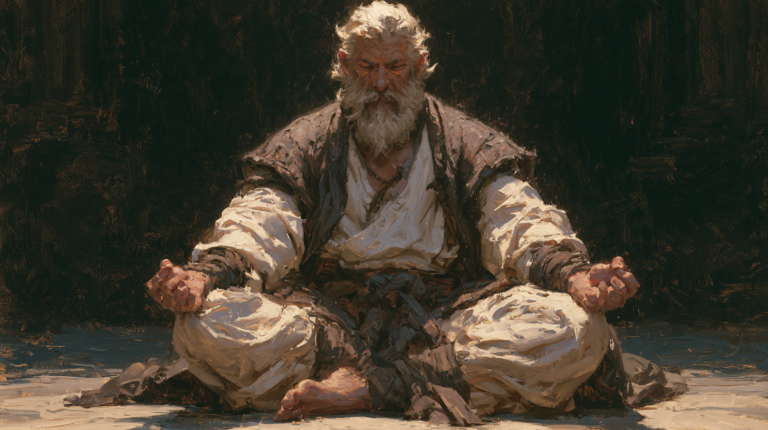
What Is Confucianism?
Confucianism is one of the most influential philosophical and ethical traditions in human history. Rooted in the teachings of Confucius (Kong Qiu, 551–479 BCE), a Chinese thinker, teacher, and sometime government official, it has shaped the cultures, governments, and personal lives of East Asian societies for over two thousand years. Yet it remains surprisingly accessible to anyone who chooses to sit with its central question: How should a person live well alongside other people?
That question alone is enough to make Confucianism a practical philosophy for how we live our lives. It is not primarily a theology or a metaphysics. It is, at its heart, a philosophy of relationships, character, and social harmony. If you have ever asked how to be a better parent, a more trustworthy friend, or a more conscientious member of a community, you have already been thinking in a broadly Confucian direction.
This article walks through the core ideas of Confucianism, the key concepts, the texts, and what the tradition still has to offer a thoughtful reader today.
Confucius: The Man Behind the Philosophy
Confucius was born in the state of Lu (in present-day Shandong Province, China) during a period of political fragmentation and social disorder known as the Spring and Autumn period. He spent much of his life in search of a ruler who would put his ideas about just governance into practice. He largely failed in that political ambition. What he succeeded at was teaching.
He gathered a wide circle of students from different social backgrounds, an unusual thing at the time, and engaged them in conversation about virtue, ritual, governance, and the good life. He did not write down his own teachings. What we have instead is the Analects (Lunyu), a collection of his recorded conversations and sayings compiled by his students after his death. It is fragmentary, sometimes cryptic, but full of genuine wisdom. If you want to go to the source, the Analects is where to start.
Later thinkers extended and deepened his work. Mencius (Mengzi, c. 372–289 BCE) developed a more expansive account of human moral nature. Xunzi (c. 310–235 BCE) offered a contrasting view. In the Han dynasty and beyond, Confucianism became the official intellectual framework of the Chinese state, and it spread across Korea, Japan, Vietnam, and beyond. What began as one man’s conversations with students became the architecture of entire civilisations.
The Core Concepts of Confucianism Explained
Several interlocking ideas form the backbone of Confucian thought. Understanding them individually, and then together, gives a clear picture of what the tradition is actually saying.
Ren: Benevolence, Humaneness, Love
The central virtue in Confucian ethics is ren, often translated as benevolence, humaneness, or loving-kindness. It refers to a genuine concern for others, a quality of warmth and moral seriousness in how one relates to people. Confucius treated ren as both the highest virtue and the foundation for all the others.
In the Analects, when students asked Confucius to define ren, he gave different answers in different contexts, suggesting that the concept is not a fixed rule but a living orientation. At its simplest, it points toward this: treat others with the same care and consideration you would want for yourself.
Li: Ritual Propriety
Li is one of the concepts most easily misread by Western audiences. It is usually translated as ritual propriety, ritual, or rites, but that translation can make it sound merely ceremonial. In Confucian thought, li covers the entire range of social norms, courtesies, and forms of conduct that allow people to live together with dignity. Bowing to a teacher, observing mourning customs, speaking respectfully to a parent: all of these fall under li.
The deeper point is that outward forms matter. How we behave shapes who we become. Ritual is not empty performance; it is a kind of moral training. By practising the right forms of conduct consistently, we cultivate the inner character those forms express. This is a genuinely interesting idea, and it resonates with modern psychology’s understanding of how habits shape character over time.
Yi: Righteousness or Moral Rightness
Yi refers to doing what is morally right, regardless of personal gain. Where ren is the warm relational heart of Confucian ethics, yi is its backbone of principle. Confucius consistently criticised those who pursued profit or advantage without reference to what was just. A recurring theme in the Analects is the contrast between the junzi (the exemplary person, discussed below) who acts from yi, and the petty person who is guided only by self-interest.
Zhi: Moral Wisdom
Zhi is the capacity for moral discernment: knowing what is right in a given situation rather than merely knowing abstract rules. Confucian ethics is not a rulebook. It requires the development of practical wisdom, the ability to read situations clearly and respond with both ren and yi. This keeps the tradition from becoming merely legalistic.
Xin: Integrity and Trustworthiness
Xin means faithfulness, integrity, or being true to one’s word. Confucius placed enormous emphasis on this virtue in both personal relationships and governance. A ruler who could not be trusted, a friend who said one thing and did another: both represented a failure not just of character but of the social fabric that depends on trust to hold together.

The Junzi: The Exemplary Person
At the centre of Confucian ethics is an ideal of the kind of person one ought to become. The term is junzi, often translated as “gentleman,” “noble person,” or, more usefully, “exemplary person.” Originally a term for someone of aristocratic birth, Confucius redefined it entirely in terms of moral character. Anyone, regardless of birth, could become a junzi through sustained self-cultivation.
The junzi embodies ren, acts from yi, observes li, exercises zhi, and maintains xin. But beyond these virtues, the junzi is someone who is continuously learning and reflecting. Self-improvement in Confucianism is not a destination but a lifelong practice. The Analects opens with a passage about the joy of learning and self-examination, and that spirit runs throughout the tradition.
This idea, that character is built through deliberate effort over time, not bestowed by birth or grace, gives Confucianism a deeply practical quality. You do not wait to become good. You practise being good, imperfectly, day after day.
The Five Relationships
Confucianism is sometimes described as a philosophy of relationships, and that description is accurate. The tradition identifies five key human relationships, each carrying specific mutual obligations:
- Ruler and subject: the ruler governs with benevolence; the subject serves with loyalty
- Parent and child: the parent nurtures with care; the child responds with xiao (filial piety, respect and care for parents)
- Husband and wife: ordered by mutual obligation (though Confucian tradition has historically been patriarchal in its interpretation of this relationship)
- Elder sibling and younger sibling: the elder guides; the younger respects
- Friend and friend: the one genuinely equal relationship, based on mutual trust and goodness
Two things are worth noting here. First, every relationship is reciprocal. The ruler owes something to the subject; the parent owes something to the child. This is not a philosophy of mere subordination. Second, the tradition has often been criticised, with good reason, for the hierarchical and patriarchal assumptions embedded in these relationships. Contemporary readers engaging with Confucianism honestly need to hold both the genuine insights and these serious limitations in view at once.
Filial Piety: Respect for Parents and Ancestors
Xiao, filial piety, deserves special mention because it is so central to Confucian social thought and so distinctive to it. The care and respect owed to parents and elders is not merely sentimental. It is the first school of moral character. How a person treats those to whom they owe everything, their parents and family, reveals and shapes how they will treat everyone else.
In the broader tradition, this respect extended to ancestors, informing rituals of remembrance and ceremony that gave communities a sense of continuity across generations. The living and the dead were understood as part of one ongoing moral community.
Self-Cultivation and the Examined Life
One of the most enduring Confucian contributions to practical philosophy is its emphasis on continuous self-examination. Zengzi, one of Confucius’s disciples, is recorded in the Analects as saying he examined himself daily on three points: whether he had been faithful in his dealings for others, sincere with friends, and diligent in reviewing what he had been taught.
This habit of daily self-review is strikingly similar to practices found in Stoicism, the evening self-examination recommended by Seneca and others. Philosophy, it turns out, keeps arriving at the same useful tools from different directions. If you are already familiar with Stoic approaches to anxiety and self-reflection, Confucian self-cultivation will feel like meeting a cousin from a different household. You can explore that Stoic tradition further in our article on Stoicism and anxiety.
Confucianism and Government
Confucius was deeply interested in governance, and the tradition he founded has had enormous political consequences. The core idea is that good government flows from good character. A ruler who cultivates virtue will attract virtuous ministers and inspire virtuous citizens. Governance by moral example (de, or virtue/power) is preferable to governance by law and punishment alone.
This was not naive idealism. Confucius was clear that structures, institutions, and the proper ordering of society matter. But he insisted that no structure could substitute for the moral quality of the people within it. This insight, that institutions are only as good as the character of those who populate them, remains acutely relevant.

Confucianism, Taoism, and Buddhism: A Brief Comparison
East Asian philosophical and religious life has rarely been neatly compartmentalised. In China especially, Confucianism, Taoism, and Buddhism have coexisted, influenced each other, and sometimes merged in the lives of ordinary people. A rough characterisation: Confucianism tends to focus on social relationships and ethical conduct in the world; Taoism tends to focus on the natural order, spontaneity, and a kind of wise withdrawal from striving; Buddhism focuses on the nature of suffering and the path to liberation from craving and delusion.
These are broad strokes. The traditions have cross-pollinated extensively, and many East Asian thinkers have drawn on all three. If you are curious about Taoism as a complement to Confucian thought, our collection of Lao Tzu’s greatest quotes is a good place to feel out those differences.
Why Confucianism Still Matters
It would be easy to file Confucianism away as a historical artefact, the ancient philosophy of a particular civilisation. That would be a mistake. Several of its core commitments speak directly to problems we face today.
The insistence that character is built, not born, and that it requires daily effort, is a genuinely empowering idea. The emphasis on reciprocal obligation in relationships pushes back against both pure individualism and pure authoritarianism. The attention to li, to the forms and rituals that hold communities together, anticipates modern sociological insights about how culture and habit shape behaviour. And the figure of the junzi, the person who keeps learning, keeps reflecting, and keeps trying to do right, remains one of philosophy’s most honest and practical ideals.
For a deeper encounter with Confucius in his own words, our collection of Confucius’ greatest quotes draws directly from the Analects and offers a sense of the man’s voice. And if you are building a broader reading practice in philosophy, our guide to the best philosophy books for beginners includes entry points into Eastern and Western traditions alike.
Confucianism does not promise enlightenment or salvation. It promises something more modest and, in many ways, more demanding: the possibility of becoming, through sustained effort, a person worthy of the relationships you are given.